Flaked Epoxy Garage Floor Upgrade in Minnetonka Townhomes
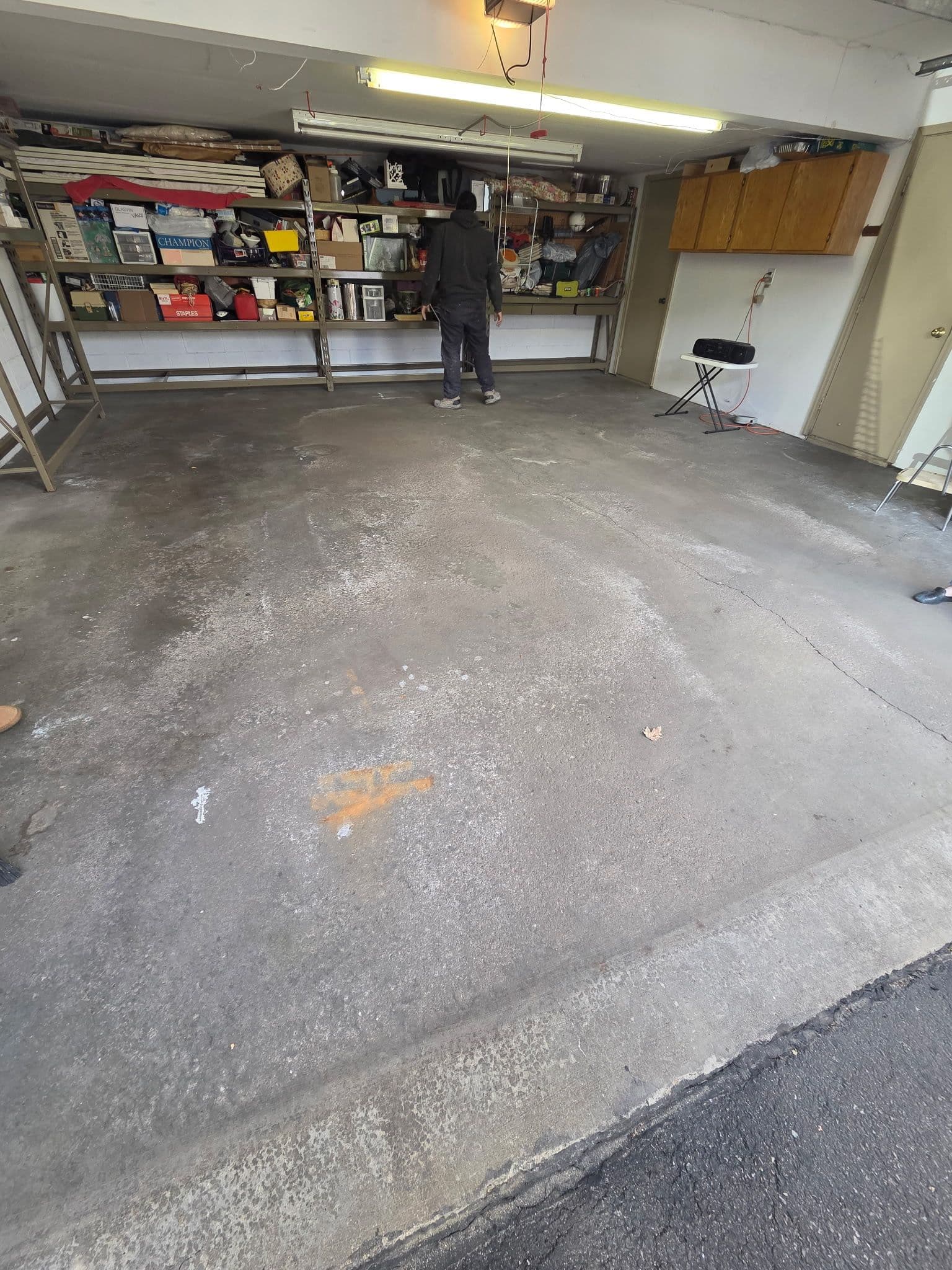
Here's what we were working with - cracked, stained bare concrete with rust-colored spots and paint splatters ground into the surface. The kind of floor that's been ignored for years. Not because the homeowner didn't care, but because it just never felt worth dealing with. That changes fast once you see what's possible.
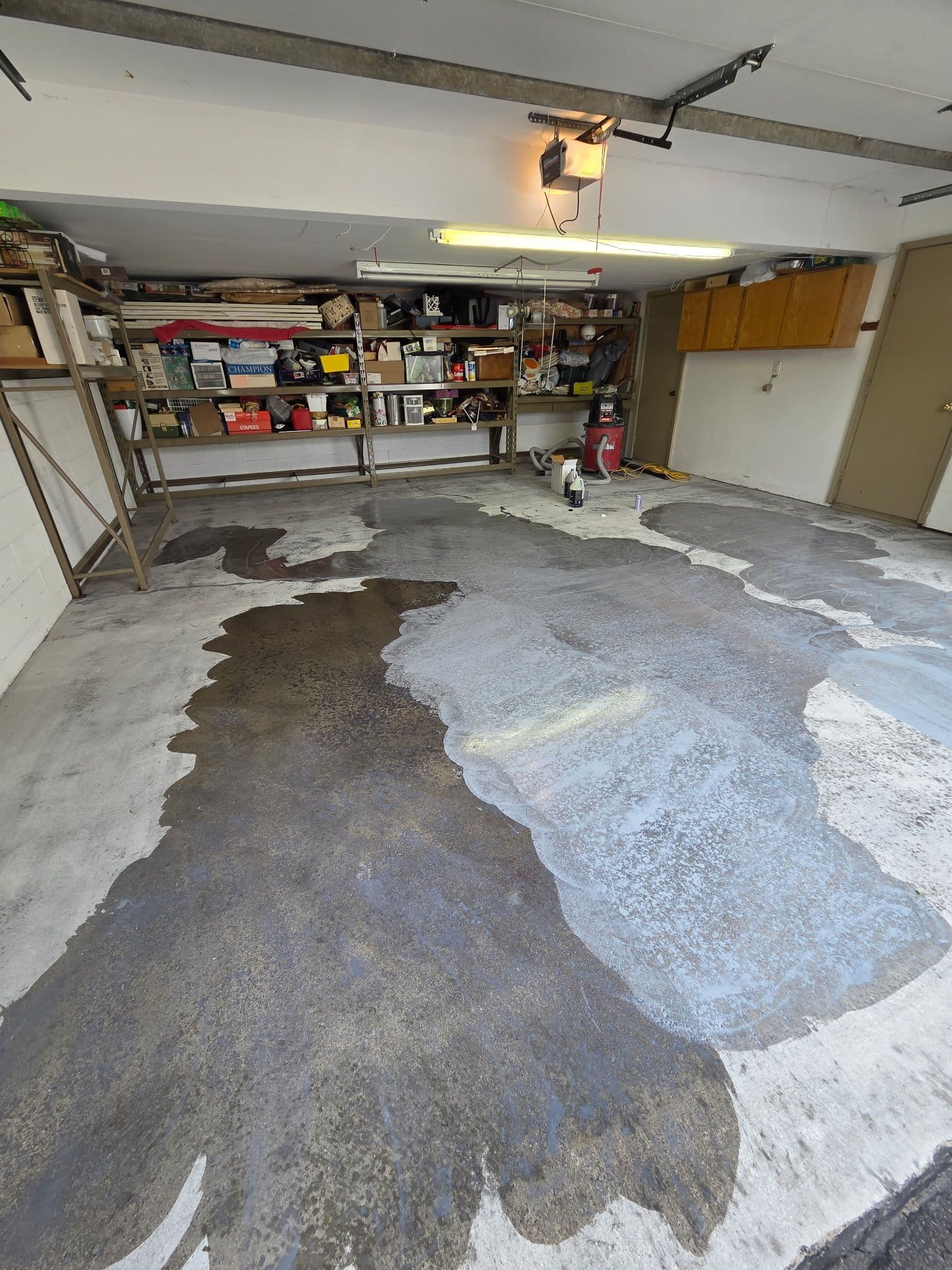
We did both neighboring townhome garages in Minnetonka, and the process was the same for each. Grind the surface down, open up the pores of the concrete so the coating actually bonds, then apply a full flake broadcast with a polyaspartic topcoat. You can see the mid-process shot where the floor is still wet and patchy - that's the base coat going down before the flake hits. It looks a little chaotic in that phase, but that's exactly how it's supposed to look.
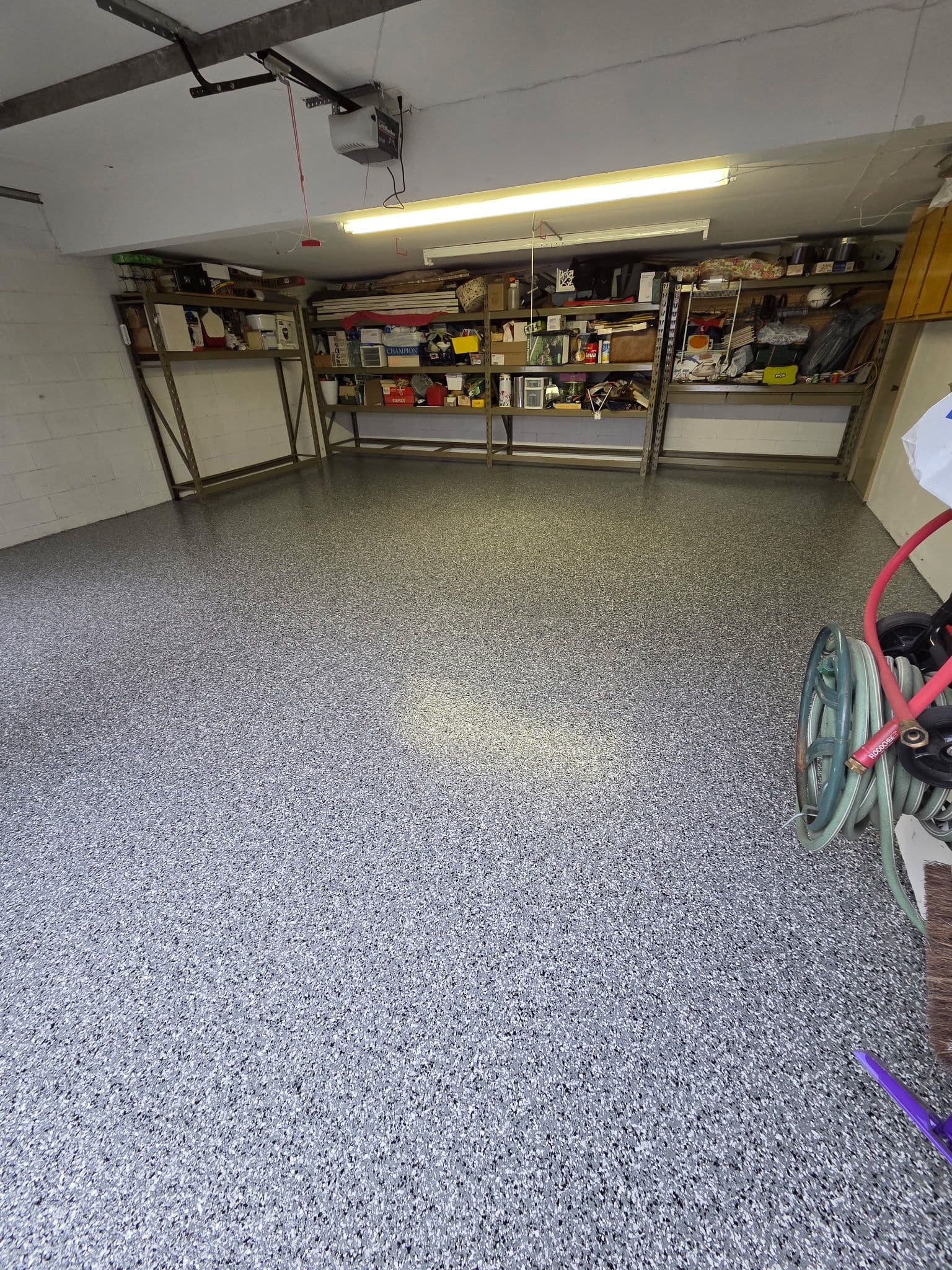
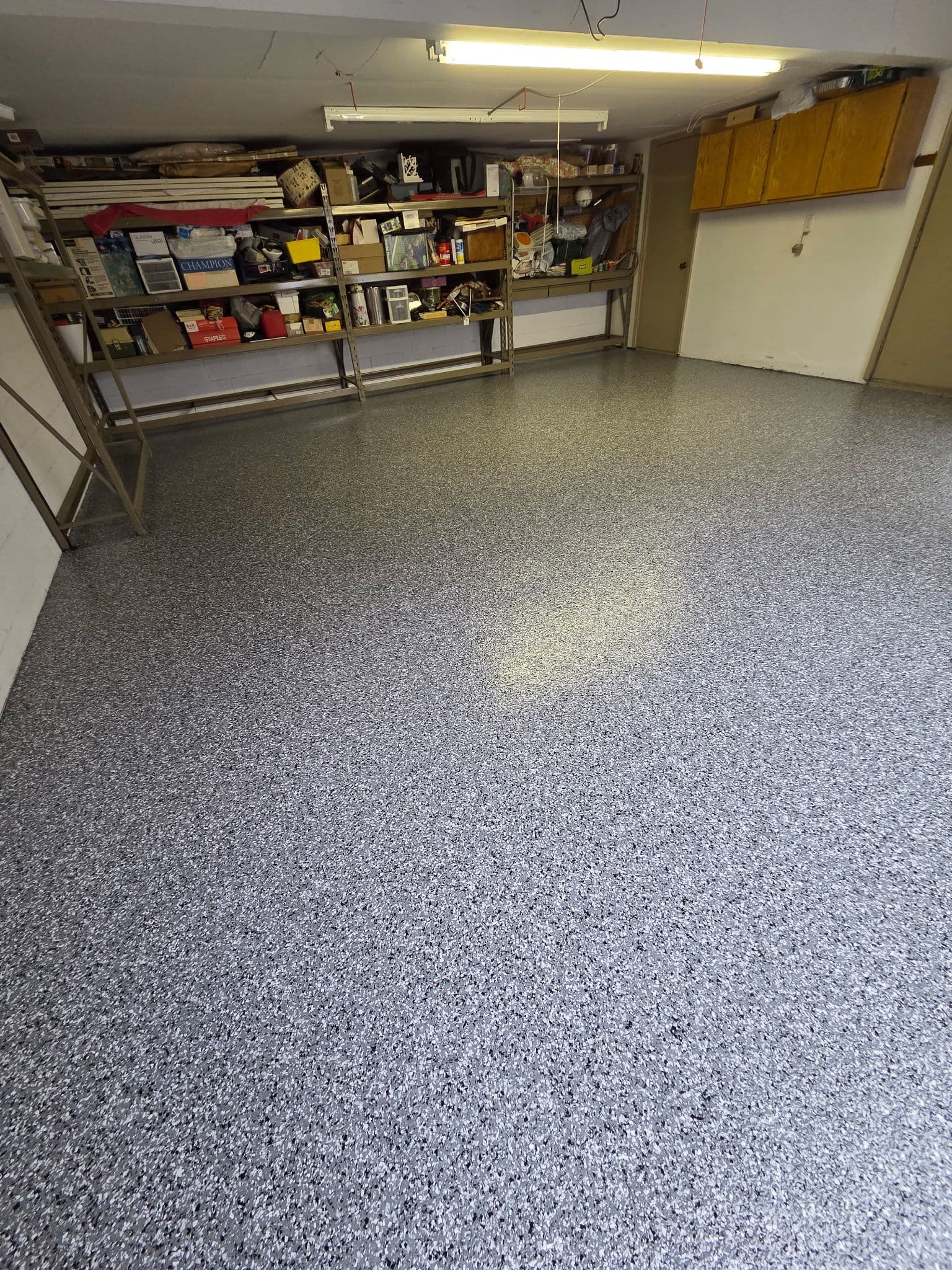
The finished floor is a tight grey and black flake blend, laid edge to edge with zero gaps or thin spots. Polyaspartic is what we use as the topcoat on our residential flaked epoxy systems because it cures fast, handles heavy abuse, and doesn't yellow over time. It also gives the floor that clean, low-gloss sheen that looks sharp without being slippery.
What we love about this one is how much the space changes even though nothing else moved. Same shelves, same cabinets, same layout. But the floor ties the whole garage together in a way that bare concrete never could. It goes from a storage space you avoid to one you actually don't mind spending time in.
Townhome garages are a great fit for this system because the footprint is manageable and the results punch way above what you'd expect. If your garage floor looks anything like the before here, it's worth a conversation.