Polyaspartic Garage Floor Done Right in Elko New Market MN
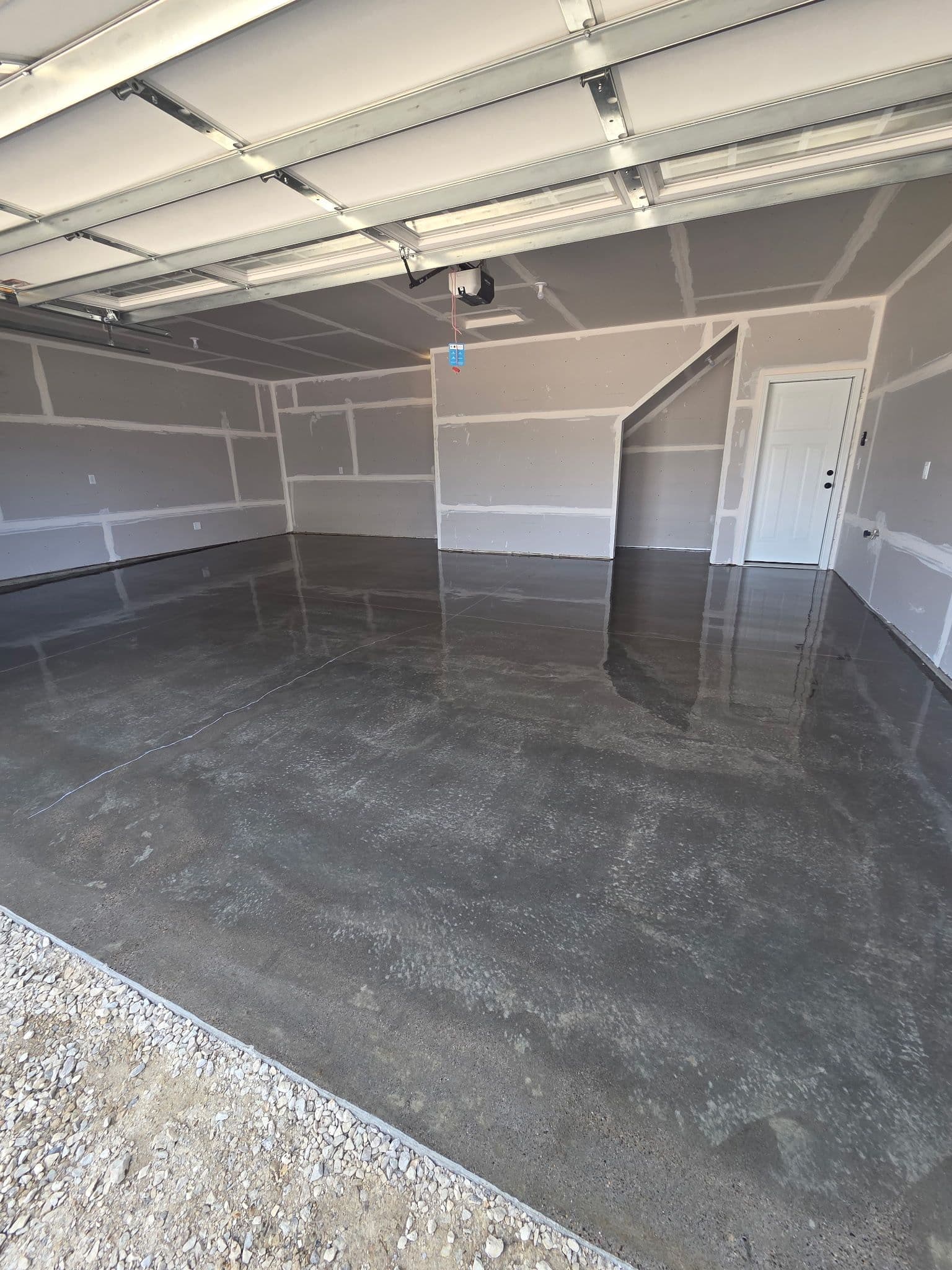
Most installers skip the moisture testing and hope for the best. We don't. Before we ever crack open a bucket of resin on a job like this one in Elko New Market, we check the slab for moisture issues first. That step alone is what separates a coating that lasts from one that peels up two winters later.
Here's the thing about new construction - the concrete looks clean and ready, but that doesn't mean it's actually ready for a coating. Fresh slabs can still off-gas moisture for months. If you put a resin system over a slab that's pushing vapor, you're going to have problems. That's why we test, and if a moisture vapor barrier is needed, we handle it before anything else goes down. No guesswork.
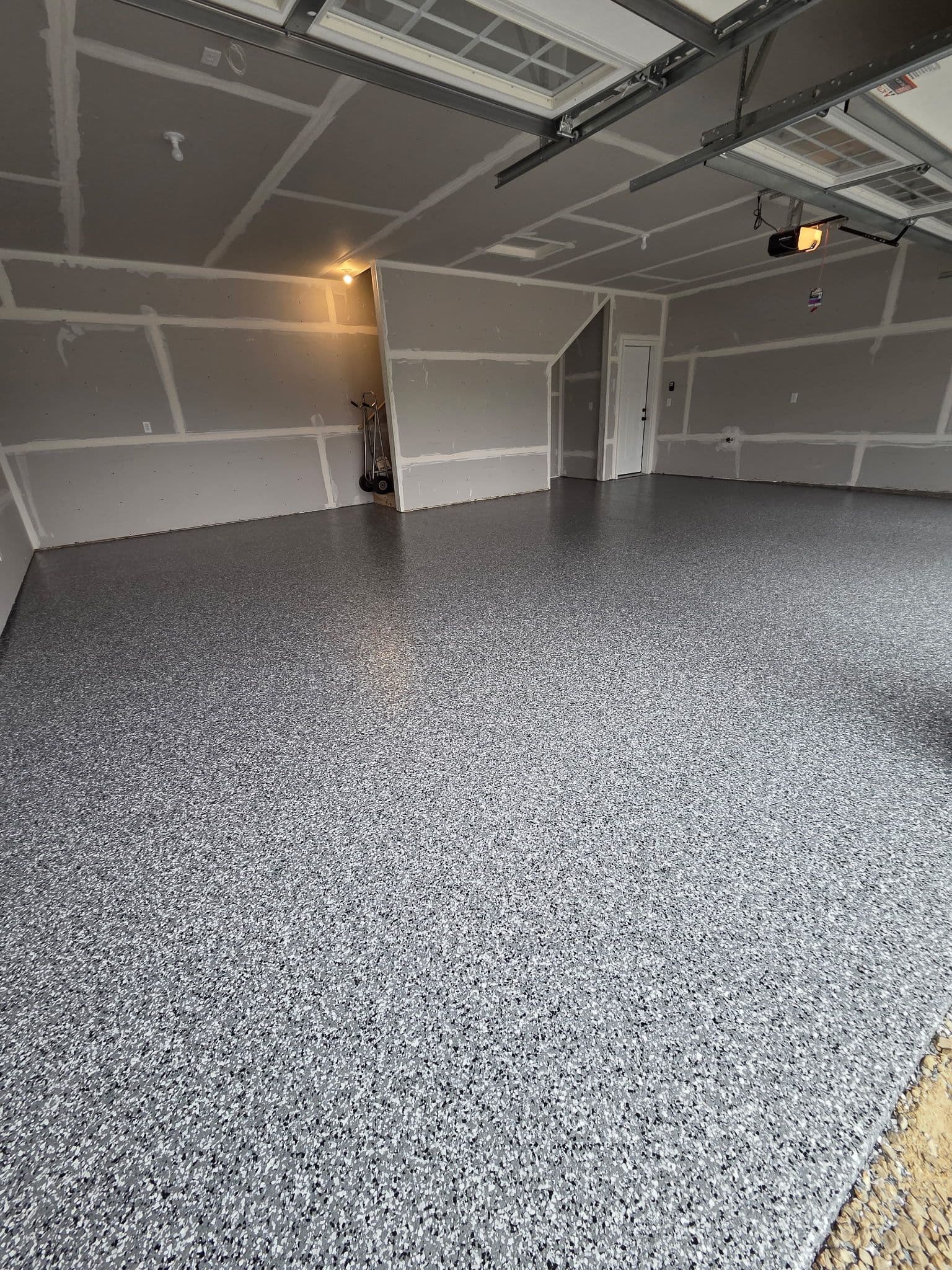
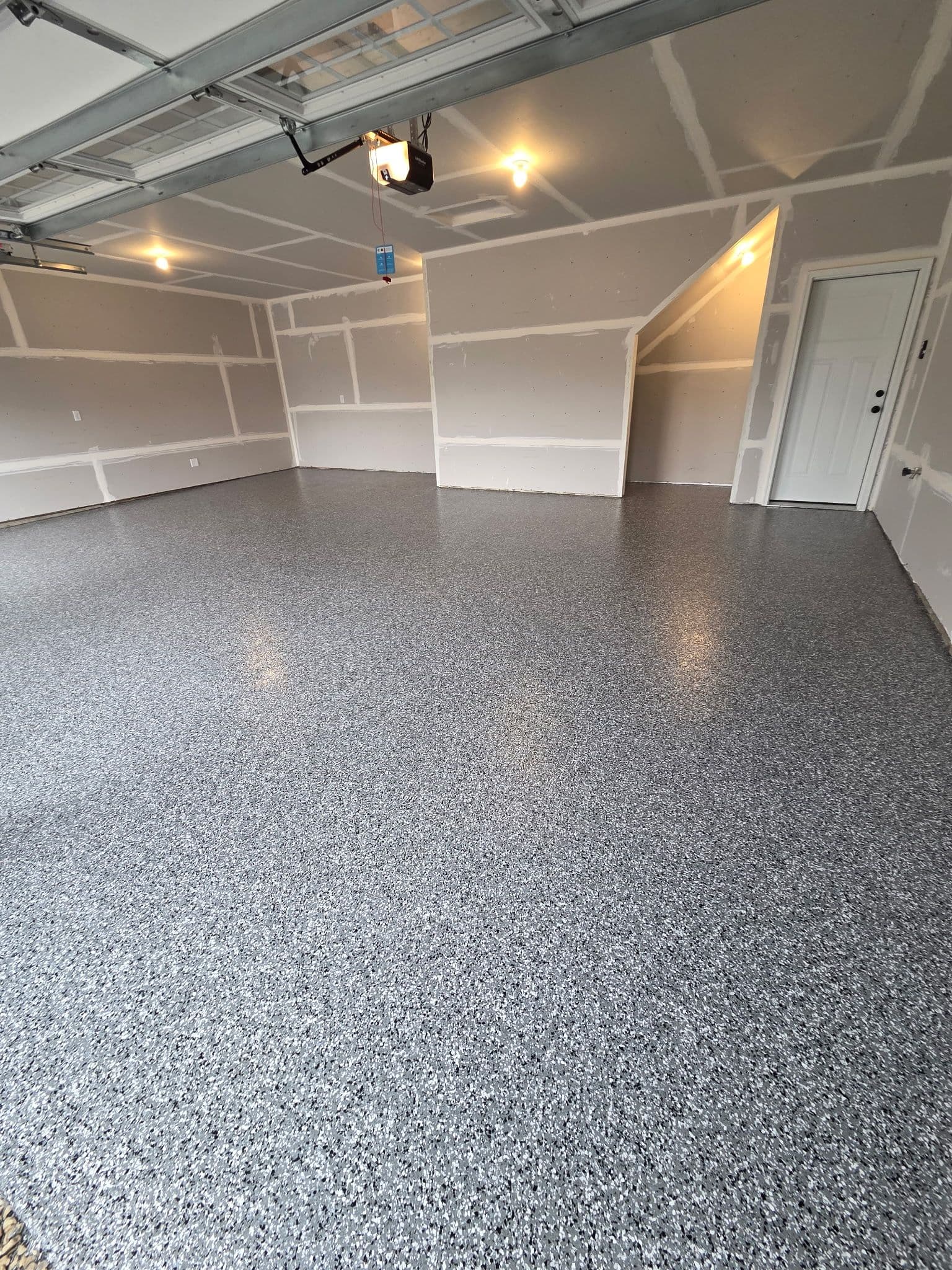
What you end up with after proper prep is a residential flaked epoxy floor that bonds the way it's supposed to and holds up under real-world use. The charcoal and white flake blend we used here gives the floor a clean, even texture from wall to wall - and it's tough. Garage floors take a beating from cars, chemicals, and foot traffic, and this system is built to handle all of it.
We topped everything off with a polyaspartic topcoat. That's what gives the floor its durability and that low-sheen, light-reflective finish. Polyaspartic is harder than standard epoxy, more UV stable, and it cures fast - which matters when a homeowner is working around a build schedule. It's the right call for a garage floor that needs to perform long-term.
Prep is never the flashy part of the job. But it's the part that determines whether you're still happy with your floor five years from now. We've built our process around getting that part right every single time.